Man is made in the image of God ; dog in the image of man.
Introduction
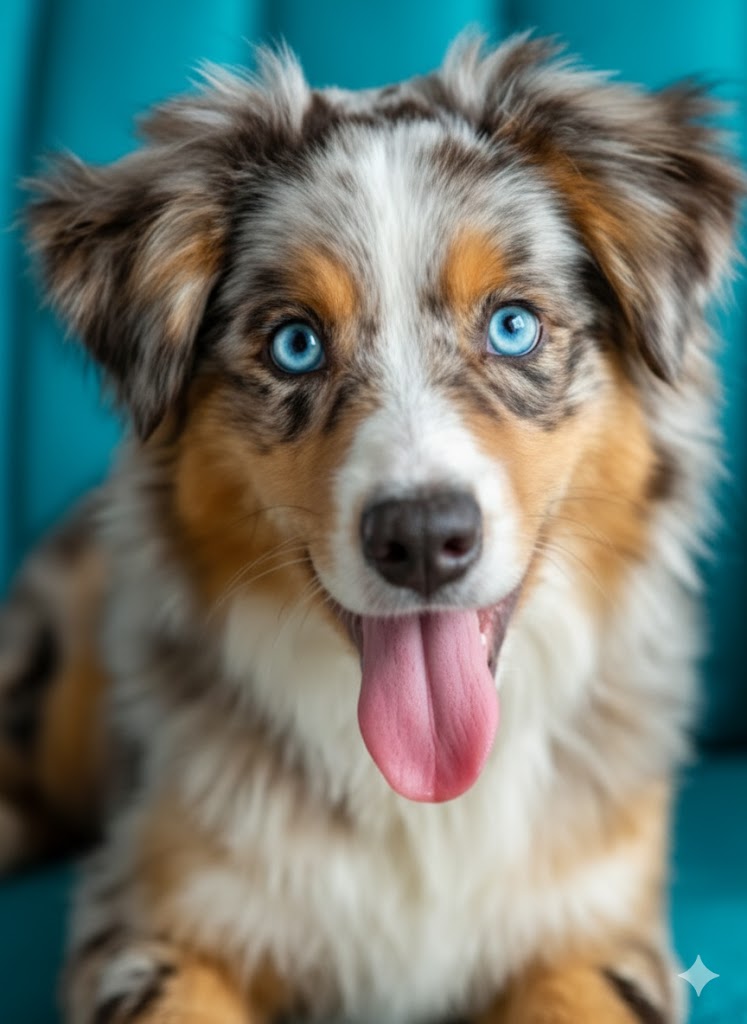
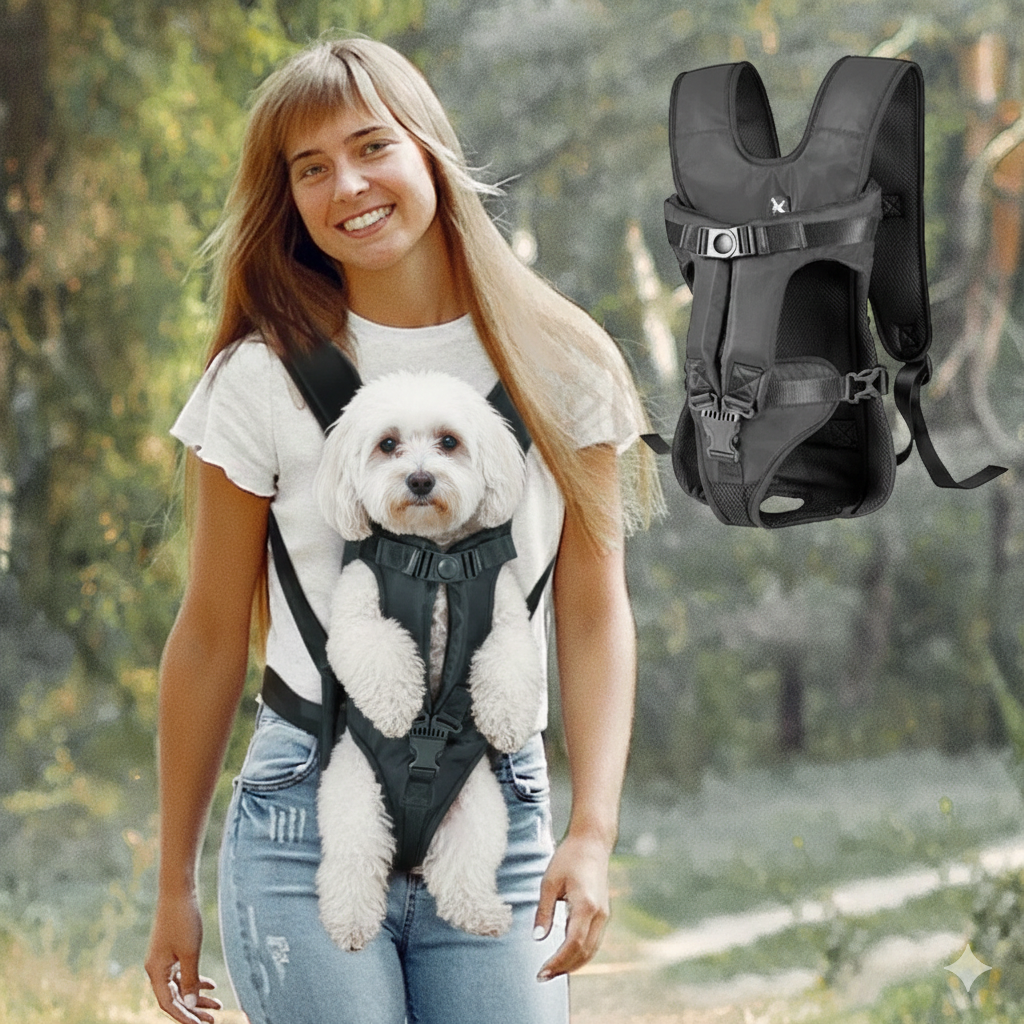
At pickleball today I saw an Australian shepherd mix with piercing, super-human blue eyes . I have seen neither human nor animal don such albino-blue eyes in my life. A few hours later, I caught wind of a separate monstrosity: a fella had affixed to his chest a baby carrier — like Zach Galifianakis in the Hangover — except, instead of carrying a baby, it saddled a small, white Maltipoo! What made the matter worse was that the lad played pickleball with the dog strapped to his chest! While playing against him I didn’t know whether to laugh , to cry, or to recommend a helmet.
I am deeply concerned with our relationship to animals, viz. how we value and relate to our furry, domestic companions. I am concerned that we condone dog breeders breeding certain aesthetic traits, rather than focusing on the well-being of their “product.” I am also concerned with the more general view that dogs function to elicit “pleasure” for humans, and the negative psychological consequences of viewing our companions as a means to an end.
Doggy Demand
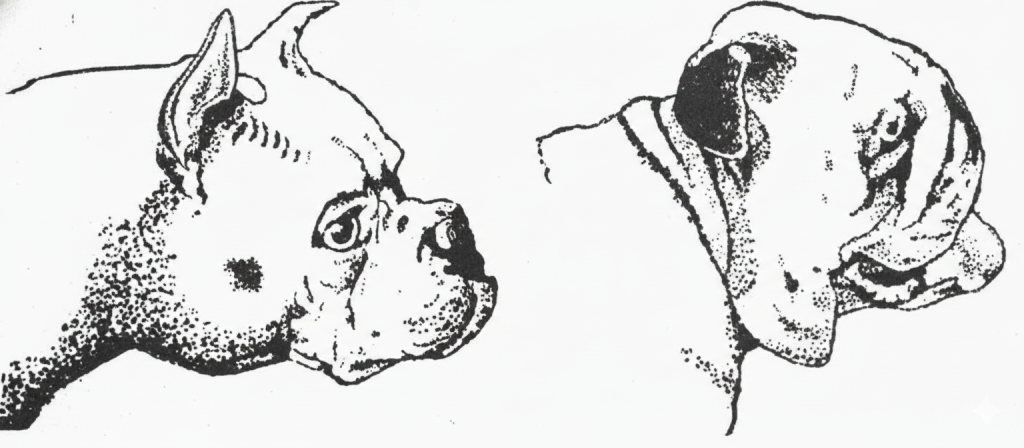
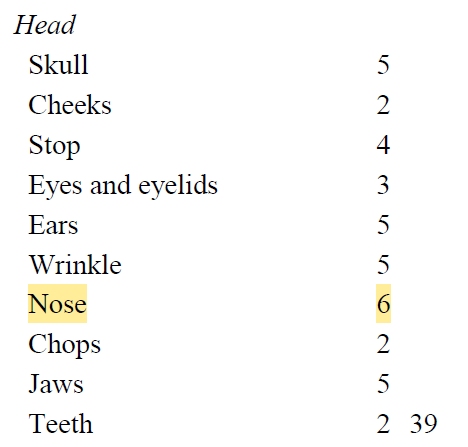
One need not look a stone’s throw away to understand how selective breeding has undermined the health and well-being of the English Bulldog . As you may well know , English Bulldogs have been selectively bred to minimize the distance between snout and skull. The American Kennel Club even requires from the breed that “the distance from the bottom of stop, between the eyes, to the tip of the nose should be as short as possible…” The grading scale the AKC uses to judge the quality of an English Bulldog assigns six points to the nose: the highest point assignment.
These truncated, “beautiful” noses, however, cause a condition called Brachycephalic Obstructive Airway Syndrome. This syndrome compromises the Bulldog’s ability to breathe. Symptoms include snoring, respiratory noise, mouth breathing — along with general, pervasive, and immutable respiratory distress. Dogs with BOAS cannot even tolerate moderate amounts of exercise; are prone to heat stroke; and have constantly disrupted sleep. Thus, “high value” English Bulldogs suffer endemically from a congenital defect human beings have intentionally wrought.
These congenital defects, however, are not borne randomly; dog breeders work at the behest of the market — “doggy demand,” if you will. There’s a demand for bulldogs with squishy-wishy faces, and breeders “merely” act to satisfy said demand. The intentional selection of maladaptive traits within the Bulldog is an indifferent, calculated response to market demand.
But why do people find those squishy faces so cute ?! I can’t speak for everyone, but my hypothesis is this: that cultural norms and fashion regarding human beauty are being applied to dogs. A trimmed nose is beautiful or “cute” because it more resembles a human nose than a traditional snout. For some reason, our culture has decided large (human) noses are less beautiful than more modest ones . In fact , in some Persian-American circles it is an expectation — if not downright obligation — for women to go under the knife and shorten their schnoz. Those same ideal standards for what makes a human beautiful are being applied to our furry companions. Market demand for a human-resembling dog is closing the bridge between human and animal — until we finally can breed a dog with acne!
“Pleasure” Factories
So far , we’ve sufficiently explained why dogs are being bred with blue eyes: the same criteria we use to call a human “beautiful” are bleeding into the animal world. But this hypothesis, alone, does not explain a grown man’s desire to play pickleball with a Maltipoo strapped to his chest. We’ve explained what makes a dog beautiful , but we haven’t explained a shift in our relationship with animals. We have yet to explain the origin of the Hangover dog!
The most succinct way for me to describe my scruple is by introducing a concept called “Anthropocentrism.” At base, it is defined as humans occupying the center of the world, and that the world’s resources were meant and designed to be exploited by humans for humans. With an anthropocentric worldview , the natural world is judged strictly in terms of its utility to humans.
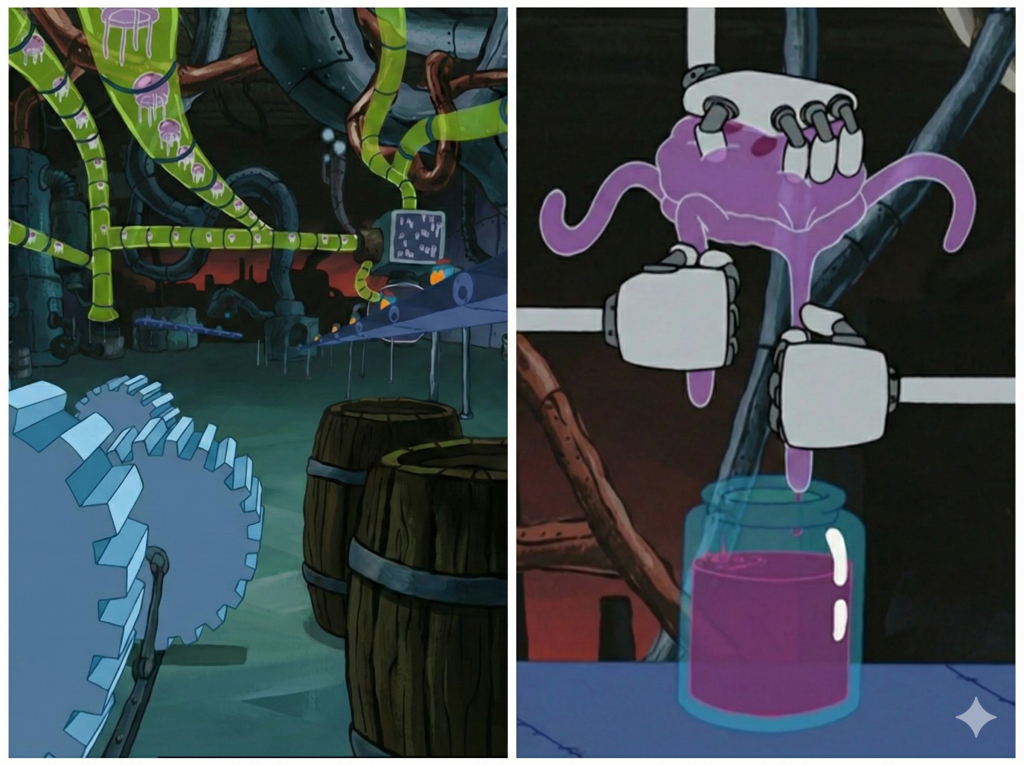
Mr. Eugene Krabs in the SpongeBob episode “Jellyfish Hunter” is an extreme example of anthropocentrism. For the uninitiated: SpongeBob catches a jellyfish and gently tickles it to produce jelly , which he uses to garnish a singular Krabby Patty. SpongeBob shares the jelly with customers , who love it . Mr. Krabs, the owner-operator of the Krusty Krab, as a response to the market demand for the jelly, captures every single jellyfish and transports them to a factory, where the jellyfish are crushed, rolled, sieved — and eventually discarded.
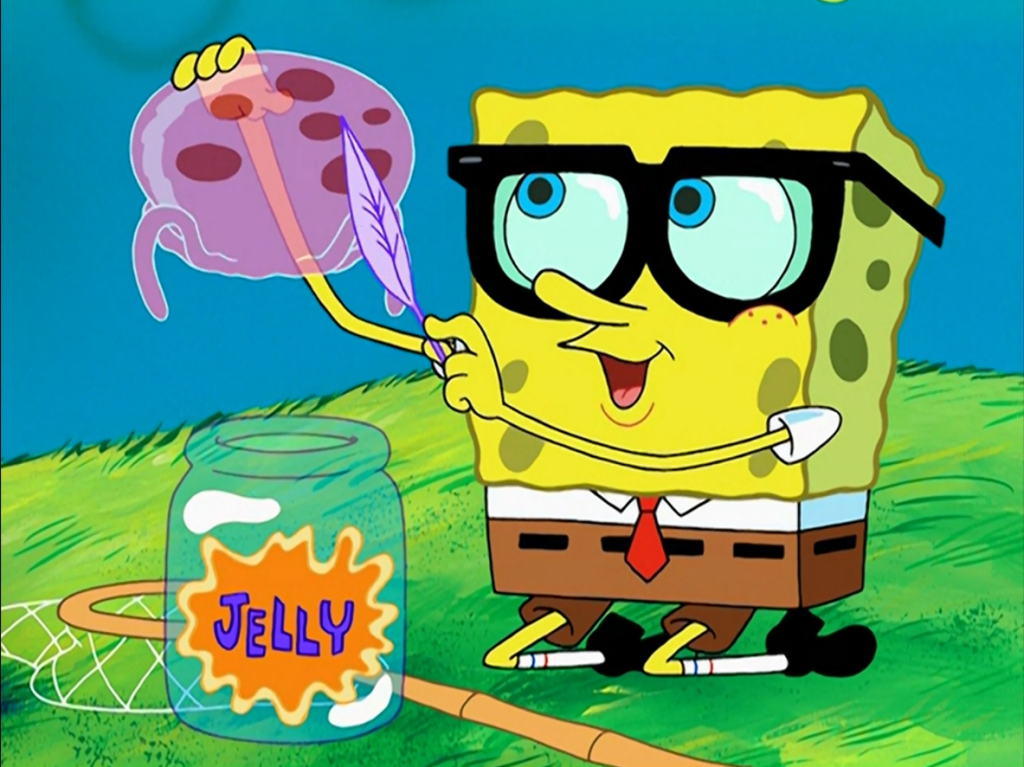
In the episode, Mr. Krabs transmutes SpongeBob’s innocuous activity into a reproducible method of making money. Mr. Krabs doesn’t even view jellyfish as jellyfish — in fact , he calls them “moneyfish.” The anthropocentric worldview turns nature into something strictly useful for human interests.
While far from the same degree as Mr. Krabs’ jellyfish factory, anthropocentrism pervades the relation with our companion species. But rather than making money off designer dogs, dogs are used to farm social credit, attention, and status amongst other dog owners. Who here knows of a bachelor in his late 20’s who purchased a designer dog worth thousands of dollars for purposes of soliciting attention from women — since he doesn’t have the courage to approach them himself? Such a man is exploiting his dog for his own interests , without considering how his incorrigible bashfulness affects his dog , or whether he even has a relationship with his animal.
The same principle — I’m not proud to say this — applies to people who purchase dogs to combat depression. People get happy around dogs , so they think “more dog , more happy.” The premise, though not entirely false, risks viewing dogs as “pleasure” factories — a means to an end. Again, there’s nothing inherently wrong or malevolent about buying a dog because it makes you “happy,” or to attract women (these dogs are generally well taken care of); but viewing nature strictly in terms of human utility, I wager, has hollowed out modern existence. And it is this empty husk of human life that treatments for depression seek to remedy.
Conclusion
So what’s the alternative? Rather than praising, or fawning, or adoring your dog … discipline it!! Teach it obedience! Because only through obedience does your dog develop a means to communicate with the outside world.
By way of example: imagine teaching your dog the “sit” command. You gently place Fido in a sitting position while uttering the word “sit.” Eventually, and through practice, Fido learns not only the posture of sitting, but also respects what the word “sit” means. Then one day you see Fido, without prompt, sitting in that unmistakably symmetrical, clean-edged way of formal work. Based on the obedience training you’ve done with your dog, you, as the “owner,” should recognize that this unsolicited, unnatural posture is a sign your dog is attempting to reach beyond itself and communicate with you. The whole purpose of dog training is not only to teach your dog how to navigate this strange, human world; it also gives what “little” rationality your dog possesses a means of expressing itself. And perhaps by bridging the distance between human and beast can we finally claim the right to call a dog “my baby.”