
Imagine a politics concerned about the well-being of the common man; a politics criminalizing the exploitation of the American ethic by corporate fiends; a revolution upending fat-cat politicians that pledge to consolidate power at the behest of the very, very few.
May I introduce you to the political movement called Populism. Wrought in the 19th century by urban laborers drudging in factories and rural farmers irate at rising railroad costs, the Populist Party sought, among other things, to rebuke the unfettered exploitation of American labor sanctioned by corrupt politicians. From my lips to God’s ears: “From the same prolific womb of government injustice breed the two great classes, paupers and millionaires.”1
This article analyzes the political rhetoric of a recent senatorial Populist candidate from Maine, Graham Platner. Platner was a Marine, an oyster farmer, and a normal working class joe before being selected by anti-establishment political strategists to lead the Democratic opposition against career politician and Republican incumbent, Susan Collins. More broadly, with the national spotlight cast upon him, Platner could have disrupted that (not unearned) Democratic stereotype of the “coastal elite:” those “liberal” politicians completely divorced from the actual plight of American labor. He could have wooed young men aged 18-29 – that coveted demographic Kamala Harris lost by a whopping 13 points2 – with his bold yet intoxicating outrage. Graham Platner would have been a national candidate men would not feel embarrassed voting for, and may have had a chance to run for President – had he not drove drunk and sexually assaulted his then girlfriend in 2021. Faith in the political outsider – cuts both ways.
Factual Background – Who is Graham Platner?
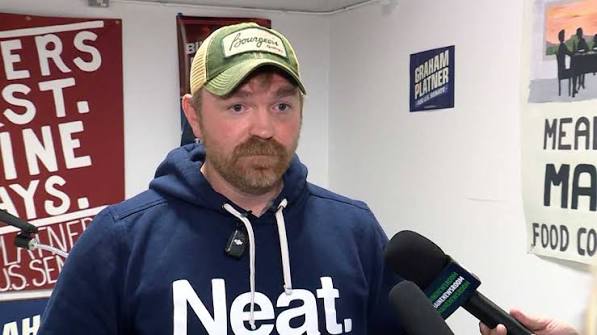
Graham Platner was a Democratic senatorial candidate for the state of Maine during the 2026 midterm elections. Platner was born in provincial Maine in 1984, and attended a middle school with a graduating class of 12 students. He worked as a kid bagging groceries, cutting lawn, and maintaining hiking trails in the White Mountains. He joined the Marines in 2003 as an infantrymen, fighting on the front lines in Iraq and Afghanistan. By the time Platner resigned from fighting 13 years later, he was wrought with a profound skepticism of the war, and doubted the sincerity of American interests fighting abroad:
Towards the end of deployment, I started to kind of return to my more cynical kind of state on the whole thing, mostly just because I saw, like, all the contractors and all the – like, we were spending so much money. Like somebody was clearly getting very rich, but it wasn’t us.3
With disgust, disappointment, and a diagnosis of Post Traumatic Stress Disorder, Platner resigned to Sullivan, Maine in 2016, where he purchased land secured by a mortgage from his father, and farmed oysters for ten years – until public service called upon him once again.
In 2020, a foreign corporation threatened to construct a 36,000 ton industrial salmon farm on the same bucolic bay Platner farmed oysters. Platner, advocating on behalf of the Frenchman Bay Conservancy, opposed the salmon farm. Excess salmon waste, he predicted, would disturb the ecology of the Bay’s fauna. It would hinder recreation. And more explicitly:
what I don’t want to see is – quite frankly – large foreign firms coming here and using our waters, and quite frankly using us as a wage labor force to extract a bunch of money, and then sending it elsewhere.4
Five years passed. President Trump toppled Kamala Harris in the 2024 Presidential election. Republicans flipped four seats in the Senate. And Democratic strategists, hungry to strike at a weakened Susan Collins in Maine, hunted for a candidate matching their pre-selected profile:
So there was a lot of conversation and thought around how the kind of candidate who could win Maine would be a veteran, they would be someone from outside of the Portland area – ideally, a community in which Trump won – and someone tied to an industry that has a specific resonance in Maine.5
When first approached by the political strategists, Platner refused, telling them to “f*** off.” But he was eventually cajoled, and on August 20, 2025, armed with those same political strategists advising candidates like Zohran Mamdani and Bernie Sanders, Platner launched his ill-fated Senatorial campaign.
Ten months later, with a national spotlight cast on the “charismatic” Senatorial candidate, Platner on June 9, 2026, prevailed as the Democratic senatorial nominee in Maine, trumping Chuck Schumer backed Janet Mills by a whopping 61 points.6 Political pundits like Jon Stewart vaunted Platner for his authenticity, calling him “a Rosetta Stone” for other grassroot Democratic candidates.7 But less than one month later, on July 8, 2026, Platner’s campaign imploded. Multiple scandals destroyed his campaign, which ultimately led to his downfall, including but certainly not limited to:
- Irreverent Reddit posts. Platner authored some bombastic Reddit comments a decade before his campaign. The content of the comments included: foisting responsibility on drunk women for sexual assault; and advocating for political violence.
- Philandering with other woman while married. Sometime between August 2023 and June 2025, Platner, according to a former campaign staffer, told the Associated Press that Platner had “sexted multiple women while married.”8
- Allegations of non-consensual sex. After inviting Platner over for a “glute massage” in 2021, Platner, allegedly nearly blackout drunk, drove to his then-girlfriend Jenny Rancicot’s house, failed to heed to her multiple revocations of consent, and had sex with her.9
And on July 10, 2026, Platner officially withdrew from the Maine senatorial race, and was replaced by former Maine state senator Troy Jackson.
Let’s now review the lessons of the Platner campaign, and uncover perhaps an ulterior motive undergirding it.
Lessons of the Platner Campaign

The Liberal Elite: Makeover Edition
There is a (not unearned) stereotype that Democrats are “coastal elites.” Take Gavin Newsom, for example, the figurehead of liberal elitism: highly educated, a multi-millionaire, and a man who may or may not have zapped every follicle of hair from his eyebrows down (why does Newsom literally have no hair on his body, besides that mane of a hairline on his head?)10 While Newsom, on paper, possesses the credentials to lead the Democratic Party in 2028, he lacks the credibility to redress working class woes: he has never had that impossible choice of paying the credit card bill, versus the electric bill; of delaying a mammogram because he can’t take time off work; of putting up a second mortgage to pay for his children’s tuition. Newsom’s appearance and veritable status within the “donor class” isolates him from the lived experience of the working class.
Graham Platner, by contrast, shatters the image of Democrats as “coastal elites.” As an oyster farmer, he set up his shingles along the “coast”; but he was by no means “elite.” Platner never graduated college. His launch video depicts him in a ragged hoodie chopping wood.11 In 2020, without foresight into future political ambitions, Platner described his “daily grind” as coming out in the morning to Frenchman Bay, “cleaning equipment and tying knots, and fixing rope and fixing line and fixing boats, and uh, cleaning oysters and listening to podcasts.”4 Platner embodies the image college educated liberals have of the working class. Even his non-eloquence – the pausing, the stammering, the awkward interjections of “like” – contributes to his image as an authentic working class individual, or otherwise a political outsider. Similar to the way President Trump was adored for serving Happy Meals at McDonalds – to say nothing of his fourth grade vocabulary – so too does Graham Platner capture the image of a working class Populist concerned for the wellbeing of his neighbors. A political outsider is the People’s insider.
Digital vs. Analog
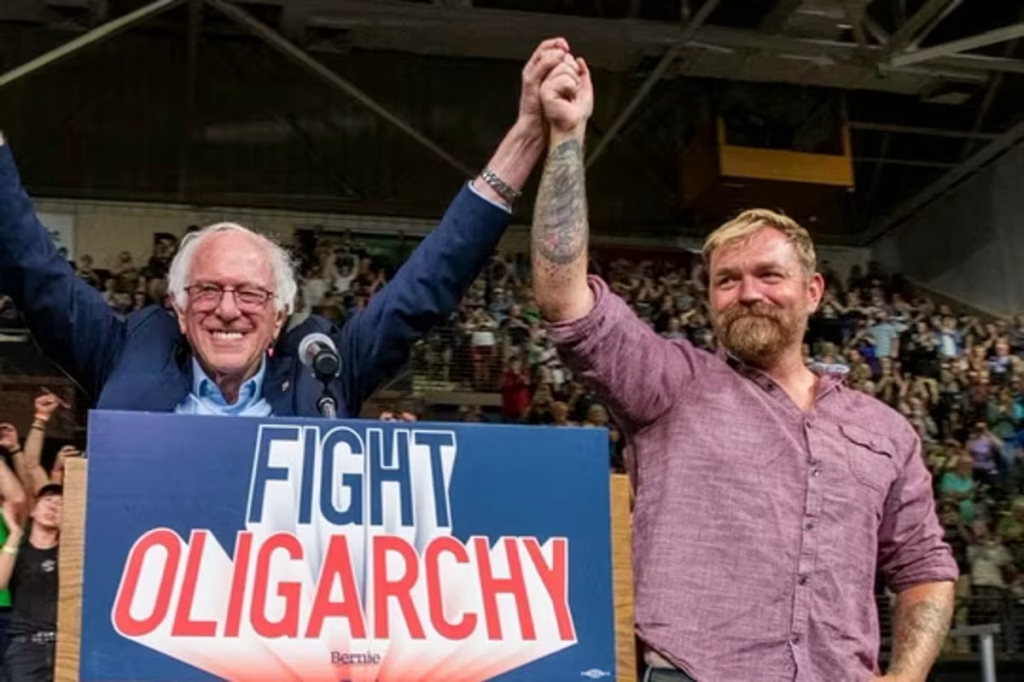
Dividing his biography into three distinct parts – his youth, his military deployment, and his return to Sullivan, Maine – Platner’s biography is an allegory for the history of the Populist movement. Just as Platner grew up in rustic Maine with a graduating class of 12, maintaining hiking trails in the White Mountains, so too was the Populist party borne, in part, from a minority of rustic farmers enraged by corporate middlemen inflating the prices of their crops.
Just as Platner fought foreign enemies in Afghanistan, so too has the Democratic Party recently been contaminated by interests foreign to the will of the People. Nothing better exemplifies the in-fighting of Democratic factions than the Democratic National Committee interfering with the primary elections between Bernie Sanders and Hillary Clinton in 2015 and ‘16. The Democratic National Committee’s Chief Financial Officer Brad Marshall, writing to DNC Chief Executive Officer Amy Dacey, contemplated manufacturing politically volatile questions against Bernie Sanders, designed to debase him as an atheist live before Kentucky and West Virginia Christians.12 DNC Vice Chair Donna Brazile slipped the Hillary campaign advance notice of debate questions regarding the contemporaneous Flint water crisis.13 Most troubling: the Clinton campaign and the DNC in August 2015 entered a Memorandum of Understanding, whereby, in exchange for the consolidation of Super PAC funds, the Clinton campaign gained control over DNC operations relating to staffing, budget, expenditures, data, technology, analytics, research, and election-related communications.14 Control was so total, DNC Vice Chair Donna Brazile confided that the DNC “‘couldn’t write a press release without passing it by’ Clinton’s campaign committee.”15 If the Democratic Party is that party supporting free and fair elections, encouraging – dare say, relying on – the free and fair distribution of new political ideas, the Clintons and the DNC – i.e. the ESTABLISHMENT – undermined those very principles in 2015. This sentiment was redounded by Kamala Harris’ unchallenged claim to the Democratic nomination in 2024. Just as Platner became cynical of American interests fighting overseas, so too have voters today become cynical of Democrats’ commitment to Populist values.
And what analog is Platner’s resignation to Sullivan, Maine, post-deployment in 2016? Perhaps this historical event foreshadows the Populist’s ideal future of America: a cyber-punk, hipster return to husbandry, combining physical toil with “podcasts;” where one lives off of government checks, purchasing land on surety from one’s attorney-father. Another take is that it is a nationwide call to action: if Graham Platner, living his ordinary life, can heed the call to serve Mainers (both in 2020 for the Frenchman Bay Conservancy, and 2026 to serve as a Senator), so too can Mainers heed the call to vote in the 2026 Midterms. Platner, as common folk, has affinity with common folk, creating as if a reciprocal bond. “If I, a low-born commoner, have been have called to act,” this hypothetical creed would go, “so too have you low-born Mainers been called to act.” Being a member of the audience you speak before confers the unique advantage of demanding reciprocity – but it also entails unparalleled responsibility. Political outsiders do well to avoid the appearance of hypocrisy …..
The Bro Code
Many unwitting political pundits expressed scorn for Platner’s “insensitive” Reddit comments from 2013, as well as his contemporary deployment of the ableist epithet “retard.” But Graham Platner’s laissez faire attitude towards speech is actually the enigma machine to capturing young males age 18-29. Platner embraced free speech; establishment Democrats do not.
It is no secret that President Trump leading up to the 2024 election was podcastmaxxing, making himself available to independent podcasters – especially those geared towards male-oriented audiences. As a result, in 2024 President Trump earned the explicit endorsement of wildly-popular podcaster/comedian Joe Rogan, as well as YouTube sensation Nelk Boys.16 But it is not as if Joe Rogan votes incorrigibly alongside the Republican Party every four years, towing the party line; in fact, Joe Rogan, betraying the sentiment of many Americans, called himself “politically homeless” in 2024.17 No: Independent podcasters have been “cockblocked” from the natural inertia of celebrating liberal candidates because the liberal establishment suppresses bold ideas and bold speech.
Describing the sentiment of many voters, Joe Rogan lambasts establishment Democrats for “trying to silence dissent” and “encouraging censorship.”18 Straight from the horse’s mouth: “Scolding for verbiage is like the worst thing that the liberal side does.”19 The Nelk Boys, more pressingly, have experienced liberal suppression first-hand. In 2022, after earning 5 million views in less than 24 hours, YouTube suppressed a sit-down interview with President Trump under the pretext of its Terms of Service.20 YouTube, in fact, has a knack for de-platforming content creators expressing political views, like Alex Jones and Steve Bannon. Just as the DNC in 2015 sabotaged Bernie Sanders’ political campaign, and finessed Biden’s patent unfitness so as to elude a duly elected Democratic candidate in ‘24, so too do liberal-associated platforms like YouTube suppress dissenting opinions. They so much fear dissent, they’d rather avoid countenancing it than to address dissent head on – like a MAN!
Despite a nominal association with Democrats, Platner, unlike his peers, has no right to condemn politically incorrect speech. A decade before his candidacy he unjustly admonished drunk women for their sexual assaults. He discussed the advantages of political violence online. Even today, a buttoned-up Platner said “retard” live on camera: as if a slip up, betraying how he would have talked at a pub with his bros. While Chuck Schumer may have found his discourse uncouth, independent podcasters like Joe Rogan would have revered Platner’s crass speech. Just as a drug dealer cannot inform the police that he’s been robbed, so too can Platner not scold independent podcasters for their language: he has, in the words of Jesus, “cast the first stone.” Platner’s non-innocent history of venting frustration on the internet would have would have likely endeared him towards those same podcasters endorsing President Trump in 2024.
It would have, too, likely endeared him to that coveted demographic: young males age 18-29. Platner seems to understand that, according to the male mind, outrageous speech is less about sincere self-expression, and more about the performance of bravado. As any young man will admit: the willingness to offend represents a man’s implicit strength; it’s a show of force – histrionics. If the state outlaws brawls or duels, at the very least a man can curse. Hence why political correctness feels like the last nick of castration: free speech is the last sublimated – yet manly – form of combat. Bold speech stands for bold strength.
No doubt Graham Platner spoke boldly:
We cannot continue into a better future without massive systemic change. And everybody knows it. Every single person I talk to in the state of Maine, … when I ask them, ‘do you think you live in a political and economic system that has your best interest at heart?’ Nobody says yes. Everybody knows. Everybody knows that this system is built to screw working people. And our grievance and our anger and our resentment about it, it manifests itself in so many ways. And what we need in this country is a clear political message about who is to blame. Because it isn’t immigrants. It’s not trans kids. It’s billionaires. It’s corporations. It’s Wall Street. It’s private equity. It’s Silicon Valley as it manipulates our feelings and commodifies our entire being. That is who all of our rage needs to be directed at.21
Platner blames billionaires for stealing Mainer prosperity, aided and abetted by establishment politicians. But Platner’s invective is less about expressing an empirical reality about billionaires, and more about posturing masculine courage. Like a gorilla beating its chest, Platner’s condemnation of the billionaire class is a kind of “atavistic” ritualized aggression. But whereas chest beating for primates deters males, for humans, the aggressive speech-act garners the opposite effect: it attracts young males towards the danger, as if aggression towards the in-group vouchsafes protection from the out-group.
A Variation on the Same Theme
An ironic corollary to liberal elitism is Democrats’ blind ignorance of President Trump’s Populist appeal. Just as coastal elites lack the lived experience of the working class, so too does their “bleeding heart” curiously stop at the question of why Trump spoke to the hearts of many working class voters. As a member of the working class, Graham knows exactly what the People want: Like President Trump in 2024, Platner, if he were to have run for President, could have wooed working class voters by sanctioning the vilification – not of illegal immigrants, but of billionaires. If President Trump endorsed scapegoating immigrants as the cause of working class indigence, so too does Platner authorize the working class to vilify billionaires. Both Trump and Platner scratch that same itch for those folks feeling abandoned by the system. The words “billionaires,” “oligarchs,” “illegal immigrants,” once put through the sieve of political rhetoric, are empty husks of words: they are a politically constructed empty space whereby voters can justify venting their indignation with absolute political impunity. Graham Platner and President Trump give the working class a “safe space” to vilify the Other. Political outsiders satisfy the unconscious Populist fantasy to be exempt from the rule of law. For this is the will of the People…
An Ulterior Motive?
The objective of the Platner campaign was less about winning a local election and more about conducting national market research, testing the appetite of Trump-style outrage as applied to Democratic rhetoric. The problems Platner identifies in his politics affect the nation at scale; curiously, his website identifies no political issue tailored specifically to Maine. Not dissimilar to other “grassroots” Democratic campaigns nationwide, Platner ran on the basis of “banning billionaires from politics,” “ending billionaire welfare,” and “defending democracy and the Constitution.”22 While no doubt billionaire tax cuts indirectly affect Mainers, Graham’s platform “misses the trees from the forest” – i.e. he fails to identify tangible, concrete problems specifically endemic to Maine. The referendum against billionaires is a political tactic applicable to Maine, but also just as applicable to Minnesota, West Virgina, or Colorado. Those same principles guiding mechanical reproduction in the factory – repeatability, standardization, mass production/scale, and of course, interchangeability – apply to the main thrust of Platner’s politics.
Adding to the lack of diligence – dare I say bad faith – of Graham’s political strategists is that they redoubled the same failed political strategy of Platner’s predecessor, Sara Gideon. Gideon in 2020 vilified Republican incumbent Susan Collins as a sellout to President Trump, Mitch McConnell, and out-of-state special interest groups.23 Platner did the same, associating Collins with a different boogeyman: “the oligarchy.” Collins, by way of contrast, campaigned in 2020 by boasting the physical, tangible achievements she secured for the state of Maine. She lauded the allocation of $49 million dollars in federal funds to repair bridges in Freeport, Yarmouth, and Penobscot County; $1.3 million dollars to redevelop the Bangor & Brewer waterfronts; and $100 million dollars for defense research programs at the University of Maine.24 Susan Collins designed her political discourse to speak to Mainers and Mainers only, without an eye to the national spotlight. It would be impossible to mechanically transplant her advertisements to a senatorial candidate in California, for example, because the victories she touts are inextricable to her electorate. The inimitability of her message implies intimacy, diligence, and a personal interest in the wellbeing of Maine. – which explains why Gideon in 2020 so utterly failed to secure votes in Democratic strongholds such as Scarborough or York, where Biden prevailed by a whopping 20 points.25
If Platner’s political strategists were earnest about defeating Susan Collins, they should have applied their abstract theory regarding billionaire greed to tangible, concrete deficits specific to the state of Maine – or, at the very least, attribute these concrete deficits to Collins herself. That Platner’s platform not only failed to do this, but also redoubled Gideon’s strategical blunders from 2020, implies a lack of diligence. More sinisterly, if the strategists designed this omission as a feature, not a bug of the campaign, such an omission would imply an intent to reach Americans nationally: an objective inconsistent with winning a local election. Platner’s political strategists were coastal elite outsiders seeking to appropriate and exploit Platner’s identity for the purpose of testing the national appetite for socialist-leaning politics. They are a Norwegian salmon farm one man once fought so hard to resist.
Conclusion
Notwithstanding his faults, Platner’s meteoric rise is a referendum on political haughtiness and the draconian prohibition against political correctness. The vilification of Trump supporters by establishment Democrats stems from that same elitism patronizing the American working class. How can liberal elites know what’s best for the working class when they don’t even understand Trump’s Populist appeal? Platner, on the other hand, embraces Trump voters as members of his own class. Fielding an unscreened town hall question regarding government benefits for illegal immigrants, Platner responds as follows:
If you listen to what she was saying, at its core she is angry about the exact same things you are. People are propagandized, people are misinformed, but people are not stupid. And we shouldn’t treat them as such. People are angry because they know they’re being screwed. They might get lied to, they might get taken in. If someone robs your neighbor’s house, you don’t go over there and laugh at them afterwards. They’ve been taken advantage of. And that’s what this is.26
Platner offered a more reasonable alternative to the Populist outrage leveraged by Donald Trump: hate billionaires. It is the role of the politician not to quell indignation, but to channel it into a more productive purpose.
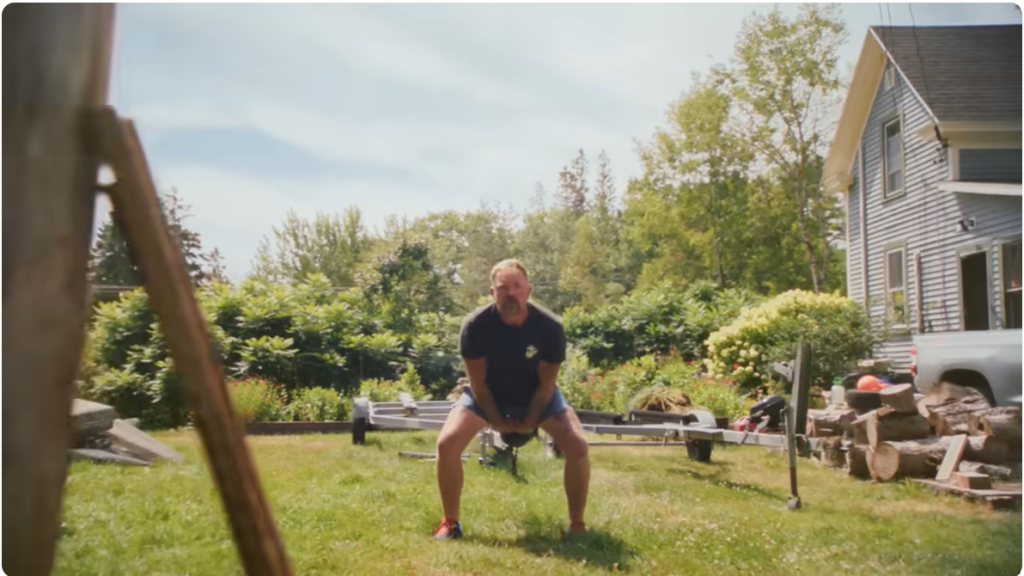
Platner, as a kettlebell swinging gun instructor, would have also rebranded the Democratic Party to appeal to males. If bold speech is the last bulwark of gender difference, Democrats have to be less punitive in ostracizing mild forms of political incorrectness. A Democratic candidate running in 2028 would do well branding himself as “pro-choice:” the right to choose the language you use. Who amongst us will volunteer as the next “pro-choice” candidate of the Democratic Party? Is it you? – probably not.
All evidence referenced herein can be accessed here. https://mega.nz/folder/a59WmK4R#S-bfPGwXxY9iqrMTQDf6kw
- The Morning News, February 25, 1892. ↩︎
- Fox News Poll ↩︎
- “Graham Platner Thinks a Political Revolution is Coming,” New York Times, May 16, 2026. ↩︎
- Frenchman Bay Conservancy Video, 2020. ↩︎
- “Platner’s Top Campaign Strategist on What Went Wrong,” New York Times, July 24, 2026. ↩︎
- “Graham Platner Wins Democratic Primary to Face Susan Collins in November,” Bangor Daily News, June 9, 2026. ↩︎
- “Politics for ME (and You) with Graham Platner,” The Weekly Show with Jon Stewart, April 29, 2026. ↩︎
- “A Timeline of Graham Platner’s Controversies During His Senate Campaign,” Press Herald, June 2, 2026. ↩︎
- “Reporting the Platner Allegations,” Columbia Journalism Review, July 8, 2026. ↩︎
- “Gavin Newsom is a Career Public Servant and Multimillionaire Businessman. Here’s How He Made His Wealth,” LA Times, October 28, 2018. ↩︎
- Graham Platner Campaign Launch Video, August 20, 2025. ↩︎
- “Hacked Emails Show Democratic Party Hostility To Sanders,” AP News, July 23, 2016. ↩︎
- “DNC Interim Chairwoman Passed Debate Questions Along to Clinton Campaign,” CBS News, October 31, 2016. ↩︎
- “Memorandum of Understanding,” March 31, 2015. See also footnote 15. ↩︎
- “Federal Election Commission’s Statement of Reasons,” August 30, 2019. ↩︎
- “Podcaster Joe Rogan Endorses Donald Trump for President,” Reuters, November 5, 2024. ↩︎
- “Joe Rogan Experience # 2220 – Francis Foster & Konstantin Kisin,” October 30, 2024. ↩︎
- “Joe Rogan Experience # 2090 – Bobby Lee,” January 23, 2024. ↩︎
- “Joe Rogan Experience # 2175 – Sam Tallent, July 11, 2024. ↩︎
- “Youtube Pulling NELK Interview Like Russia Censoring Invasion,” Business Insider, March 11, 2022. ↩︎
- “Graham Platner Speaks to PACKED August Crowd,” Youtube, April 30, 2026. ↩︎
- “Graham’s Platform.” ↩︎
- “The Political Survival of Susan Collins, Brookings, December 22, 2020. ↩︎
- “Susan Collins for Senator,” 2019-2020. ↩︎
- “Why Joe Biden’s Maine Victory Didn’t Translate Down the Ballot to Sara Gideon,” Maine Public, November 4, 2020. ↩︎
- “Graham Platner Responds to Trump Supporter,” Youtube, October 7, 2025. ↩︎